Post-War Contemporary Design
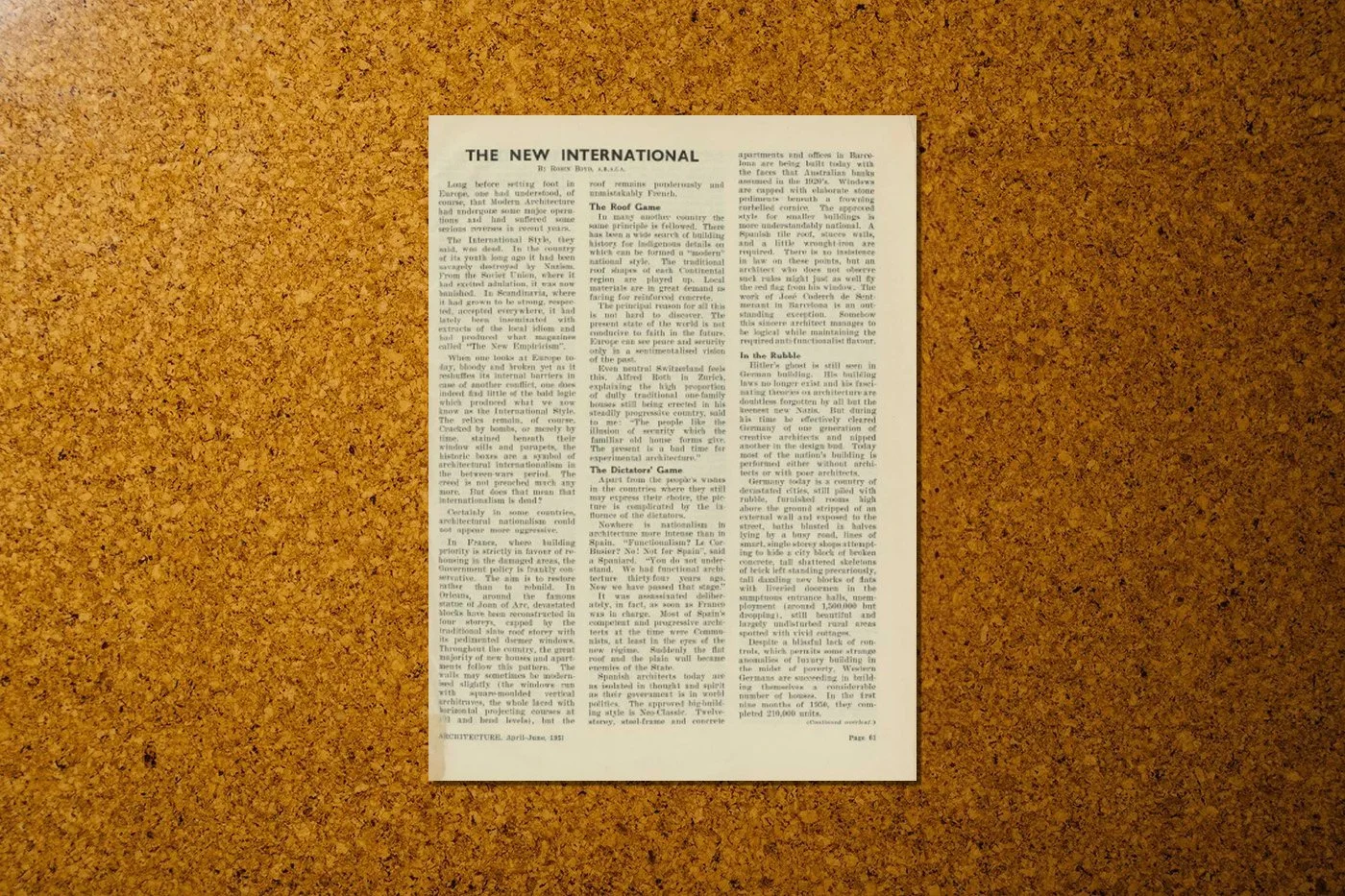
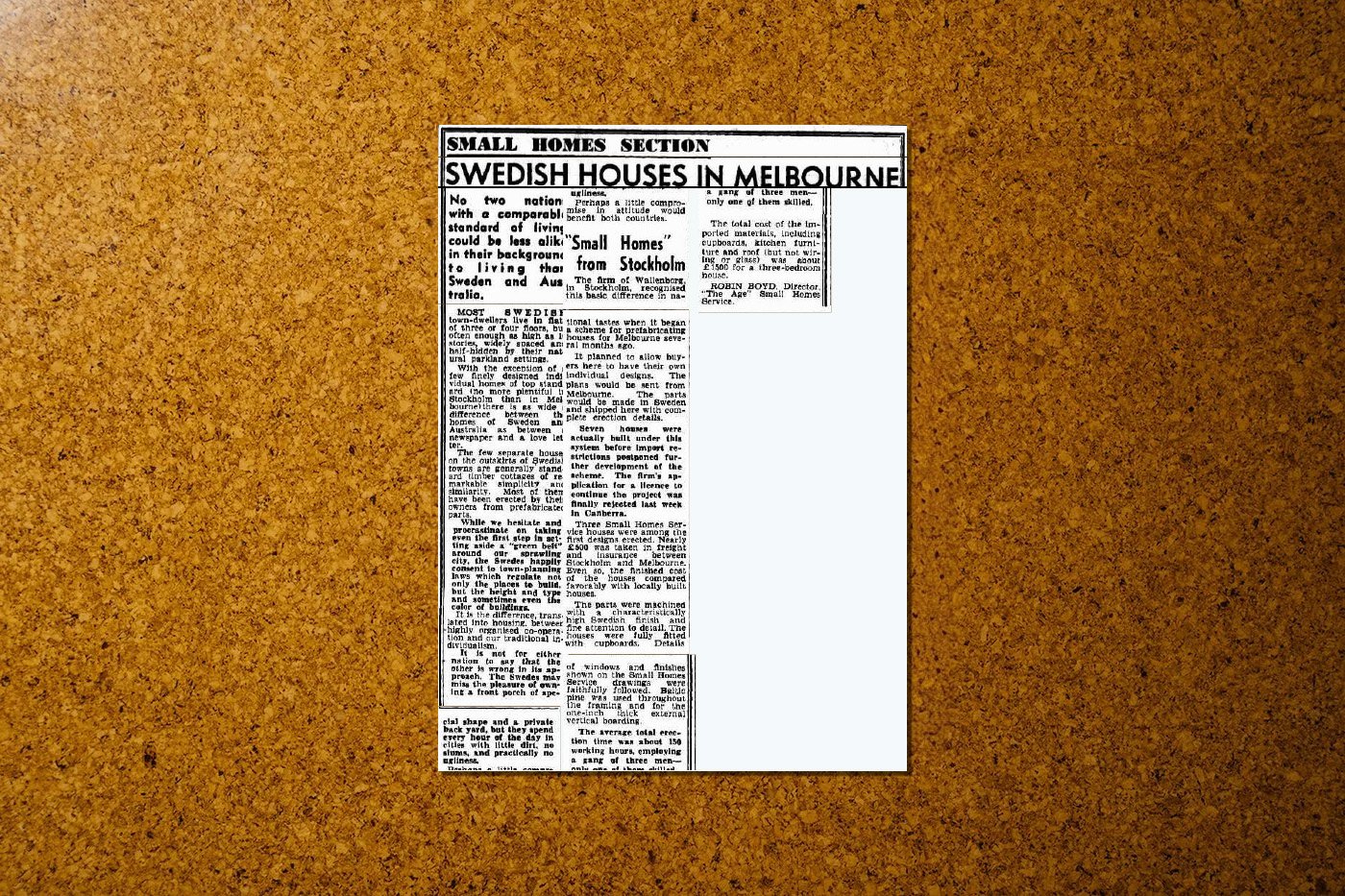
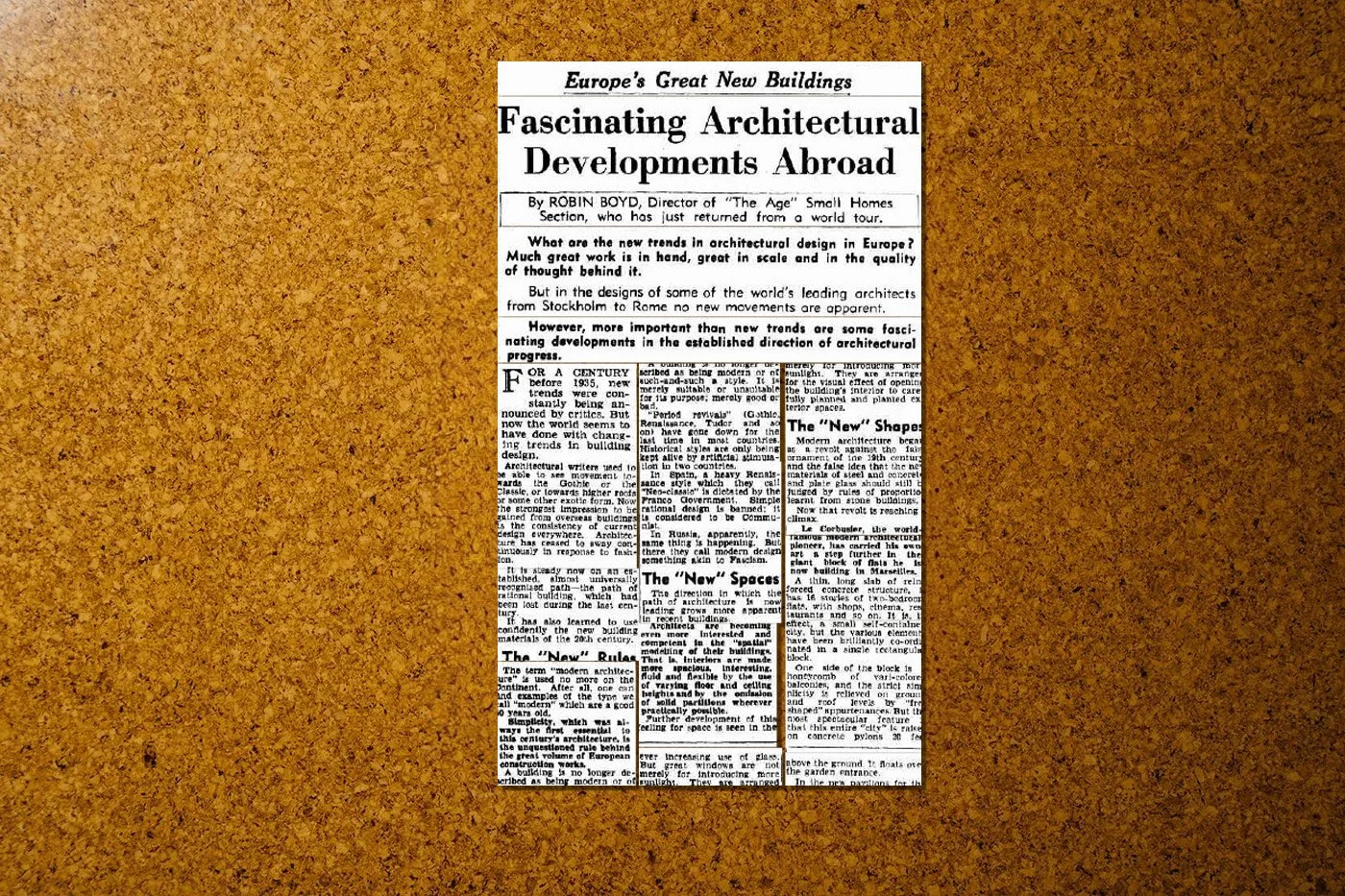
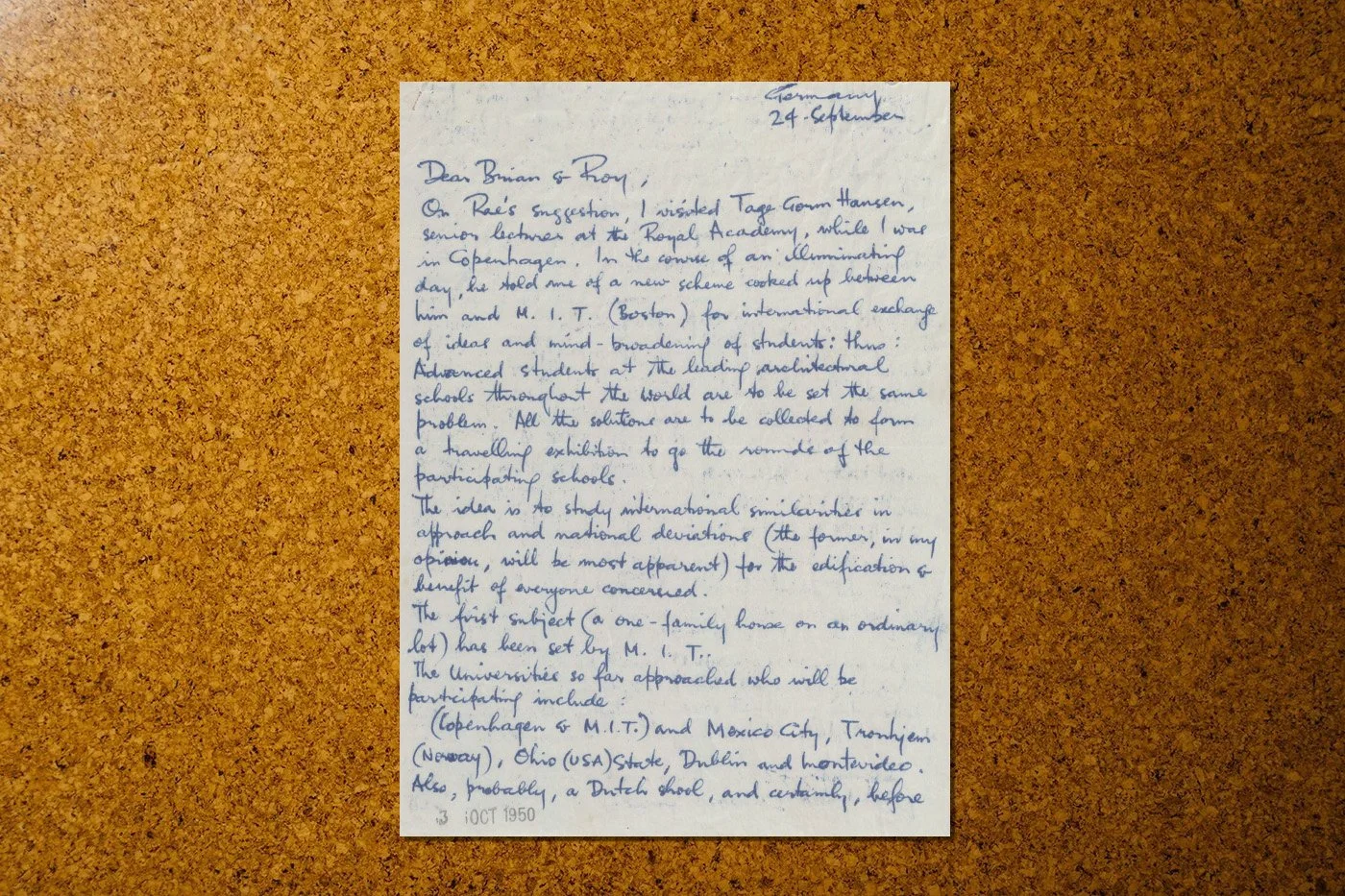
In the late 1940s, after the cataclysm of World War II, the architecture of Sweden and Denmark appeared to offer a new humanistic direction, indicative of welfare state beneficence. It was a warm, domestic form of modernism that also embraced ideas of prefabrication, hence satisfying the ethos of rational functionalism. The British periodical The Architectural Review famously declared in 1947 and 1948 that this architecture represented a ‘New Empiricism’. Robin Boyd’s personal interests at the time in regionalism, his concept of a Victorian Type, and the potentials of prefabrication to alleviate the postwar housing shortage meant that on his 1950 trip to Europe, visiting Scandinavia would be a priority. Contemporary Swedish interior design, furniture and fittings had been much in vogue in Melbourne since the late 1930s and Boyd would regularly promote Scandinavian design in his articles for the RVIA Small Homes Service in The Age.