Nordic Urbanism
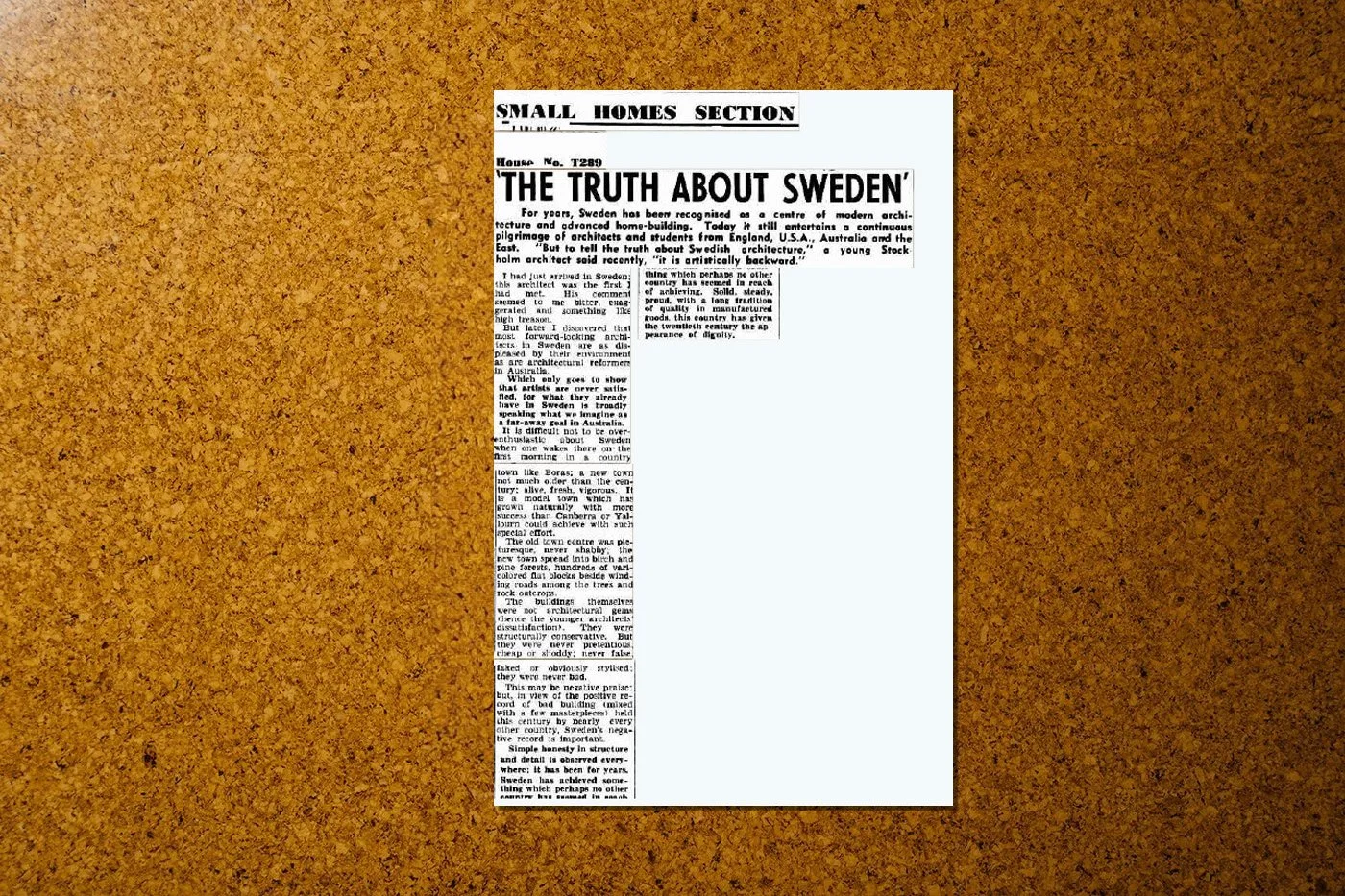
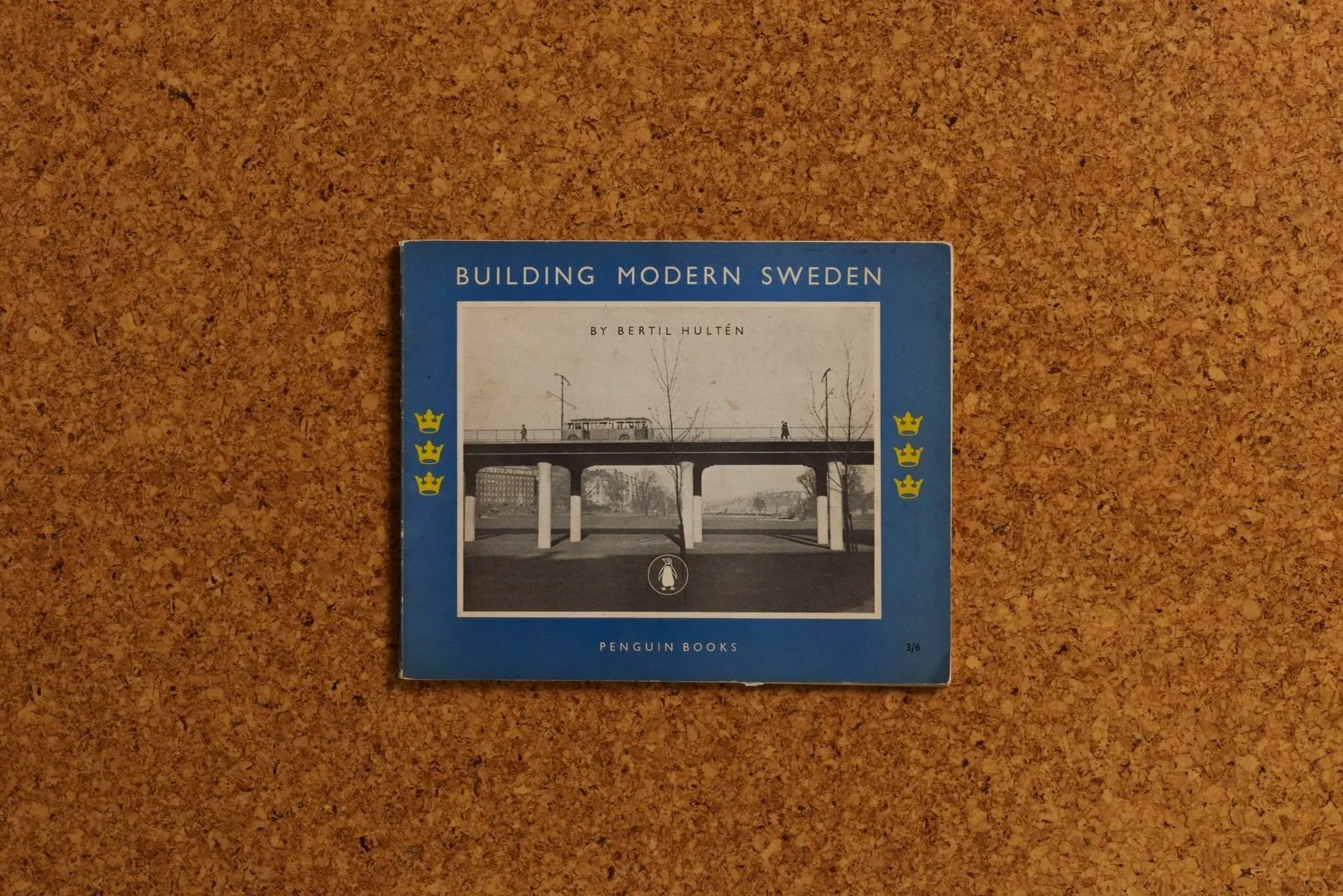
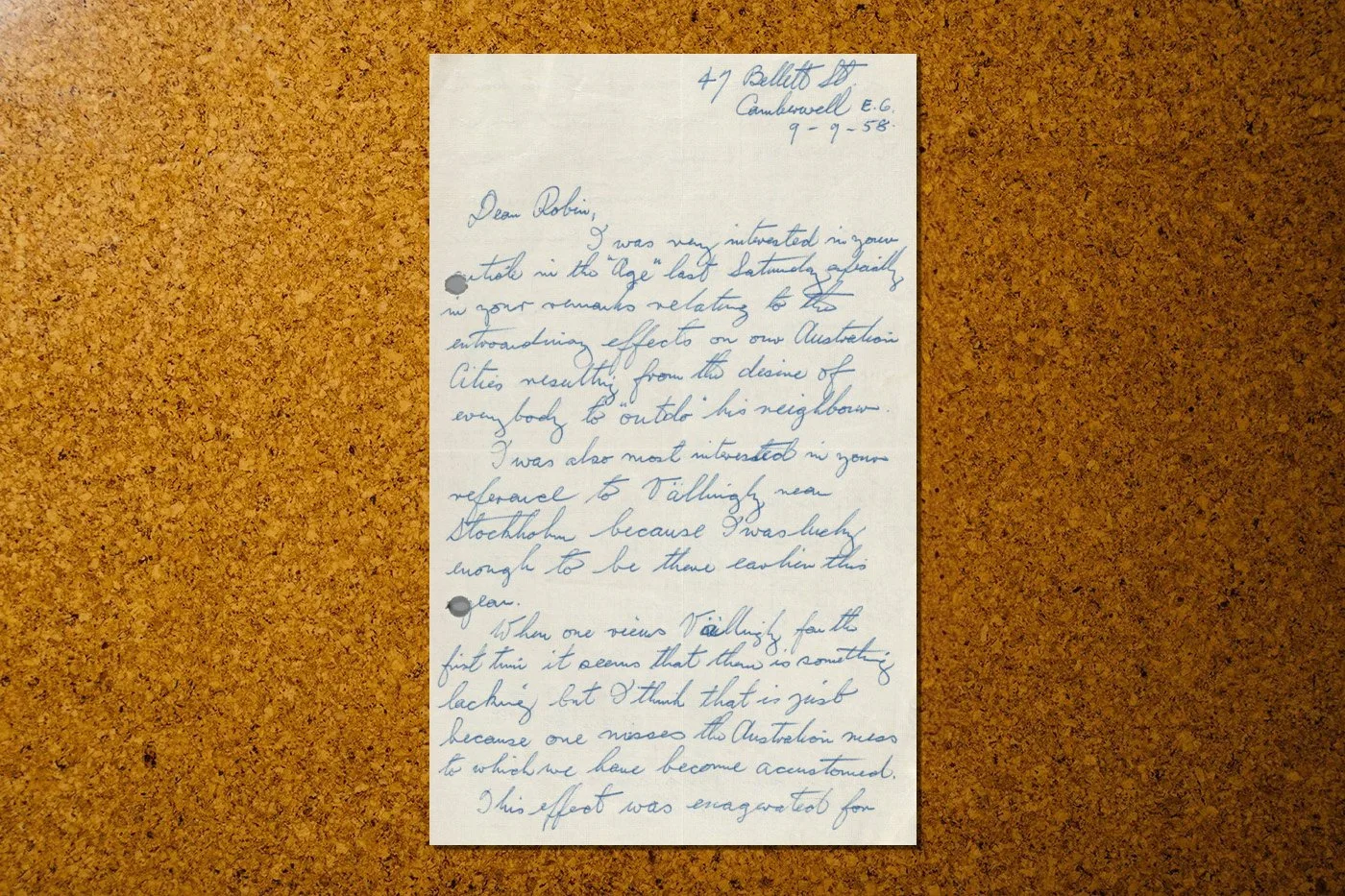
How to design the postwar city and its residential areas was a preoccupation for many architects and urban planners in the 1950s and 1960s. Some of the most admired examples of new housing combined with ‘new town’ urbanism could be found in Denmark, Sweden and Finland. On his first trip to Europe in 1950, Robin Boyd visited many examples, including townhouses by Arne Jacobsen in Denmark and numerous New Empiricist social housing estates in Stockholm. Of particular interest to him were the combinations of low, medium and high-density housing grouped around an urban centre, best seen at Vällingby (1954), one of Sweden’s first modern planned suburbs. In 1964 Boyd visited Tapiola in Finland, one of the first ‘new towns’ of continental Europe designed along garden city lines, which commenced construction in the 1950s, continued into the 1960s, and saw the involvement of many of Finland’s most progressive architects like Aarne Ervi, Viljo Revell, Alvar Aalto, and Kaija Siren. Boyd wrote about both places. For him, they provided lessons for critical rethinking the nature of suburbia and urban form in postwar Australia.